Showing posts with label Spring Mountain. Show all posts

Friday, May 31, 2013

Sojourn Cellars: wines for every day of the week!


Not far from the main square in downtown Sonoma is a quaint little house-turned-tasting room. There’s a sign out front with a lawn chair on it. This inviting and casual space is the home of Sojourn Cellars.

What started as a mere 100-case release of Cabernet Sauvignon in 2001 has grown to an amazing portfolio of small-production offerings of Pinot Noir and Chardonnay as well. When I recently visited the tasting salon, I was thrilled to taste seven different wines, each of them enjoyable with significant food-pairing potential.

The 2011 Chardonnay, Sangiacomo Vineyard, Sonoma Coast ($45/bottle; 250 cases produced) smells of honey blossom and white flowers. In the mouth, it is opulent and creamy thanks to the French oak treatment and 100% secondary fermentation. Baked apple and vanilla notes round out the mid-palate with refreshing hints of pineapple and ginger on the finish.

The 2011 Pinot Noir, Sonoma Coast ($39/bottle; 1250 cases produced) gives off delicate aromas of rose petal and red currants. It is on the lighter side with thrilling acidity, racy red cherry fruit flavors and dusty tannins with a whisper of smoke. This is an extremely easy-drinking wine that would pair nicely with prosciutto-wrapped asparagus or bacon-wrapped scallops.

The 2011 Pinot Noir, Rogers Creek Vineyard ($48/bottle; 550 cases produced) is dark and voluptuous for a Pinot. Perfumed with purple flowers and baking spice, the palate delivers a mélange of boysenberry, raspberry and black cherry fruit laced with a subtle earthiness. Wow!

The 2011 Pinot Noir, Russian River Valley (not yet released) is silky smooth and elegant. This purple-hued beauty tastes like dark plum fruit and red candy and will only improve with a little age.

The 2011 Pinot Noir, Gaps Crown Vineyard, Sonoma Coast ($54/bottle; 800 cases produced) is chocolate-covered cherries in a glass. Dark ruby-red in color, this wine is luscious and mouth-filling; it could accompany many dark-meat dishes.

The 2010 Cabernet Sauvignon, Spring Mountain District (please inquire for price and availability) tastes remarkably similar to the Cabernets from Terra Valentine (which I love!). Sourced from the Wurtle Vineyard, this Clone 7 Cab has aromas of black tea and dark fruit. Rich with minerals, the palate delivers satisfying flavors of ripe blueberry compote and blackberry jam. For a winery known for its Pinot Noir production, this Cab is absolutely delicious; a shining gem of a wine.

The 2010 Cabernet Sauvignon, Beckstoffer Vineyard Georges III, Rutherford, Napa Valley ($95/bottle; 225 cases produced) is a big, serious wine with a lot of longevity. Definitively masculine, this wine is complex and structured with firm tannins and a lingering richness. Will cellar very well and pair perfectly with a filet mignon.

Maybe you're wondering about the lawn chair... I had to ask about the story behind it, because these wines are hardly the sip-by-the-pool kind. When the founders decided to name their winery “sojourn”, which means to vacation or rest (verb) or a visit (noun), a lawn chair was the obvious emblem for rest and relaxation. Proprietor Craig Haserot also thinks the lawn chair symbolizes the “laid-back” atmosphere in Sonoma County.

These wines are so good you will want to find a comfortable place in which to sit back and enjoy them!

Don’t forget to call ahead for an appointment at the Sojourn Tasting Salon the next time you’re planning a trip to Sonoma. I also highly recommend grabbing lunch at the Sonoma Cheese Factory (the pulled pork sandwich and slaw is to die for). More Sonoma-based winery recommendations to come soon. As always, I invite you to connect with me on Facebook. I look forward to your comments. Cheers!


Thursday, October 25, 2012

Smith-Madrone on Spring Mountain

Spring Mountain is one of my preferred sub-appellations of the Napa Valley (along with Howell Mountain and Stag’s Leap District) and there are many wineries worth visiting up there. If you only have time to visit two, I highly recommend Terra Valentine (a long-time love of mine) and Smith-Madrone (a new favorite), which provide two totally different experiences.

I recently had the opportunity to spend an afternoon with Smith-Madrone founders and brothers, Stu and Charlie Smith.

The tour starts in the vineyard with Stu. Perched 1900 feet above the valley, the sweeping views from Smith-Madrone are amazing. The rows of Riesling, Chardonnay, and Cabernet Sauvignon zigzag over the landscape. As Stu explains, they have been laid out to maximize sun exposure for early ripening. He discusses the challenges that come along with growing grapes on a steep hillside and the difficulties they had clearing the space almost 40 years ago. They now have a total of 38 acres planted to vines; the rest of their property is still covered in forest, densely populated with Douglas Fir, Manzanita, and oak trees.

Stu points out the large single madrone tree in the middle of the young Riesling vineyard and explains that this tree was the inspiration behind the name of the winery. He and Charlie wanted to put their name on the label, but they also wanted something more original than “Smith Winery” and “Smith Brothers” was already synonymous with cough drops. So they settled on Smith-Madrone (admittedly, it has a better ring to it than Smith-Douglas Fir or Smith-Manzanita).

From the top of Spring Mountain, the valley below looks so peaceful and quiet below, which is not really the case at least this time of year. Most wineries are currently in the throes of harvest right now, with traffic congesting sections of Highway 29, but the Smith brothers are calm and relaxed—they have already picked the last of their estate-grown grapes and they don’t source additional fruit from any other vineyards.  

Stu leads us back down to the winery and inside the barrel room, where we are handed wine glasses and introduced to his older brother Charlie. An old oak barrel turned upright serves as a table as we taste through the estate-bottled current releases.

Clinking glasses with Charlie!
The 2009 Chardonnay ($30/bottle) is a refreshing delight (it was about 95 degrees the day of our visit). It is crisp and clean despite going through 100% malolactic fermentation. No buttery or popcorn flavors in this glass! A pale straw hue, this wine has mouthwatering acidity with zesty citrus and tropical fruit aromas. The entry is alive with flavors of Meyer lemon, pear, and minerals while the mid-palate offers richer notes of crème brûlée, sweet cream, and stone fruit. This Chardonnay, although particularly light in body, would pair nicely with many types of foods.

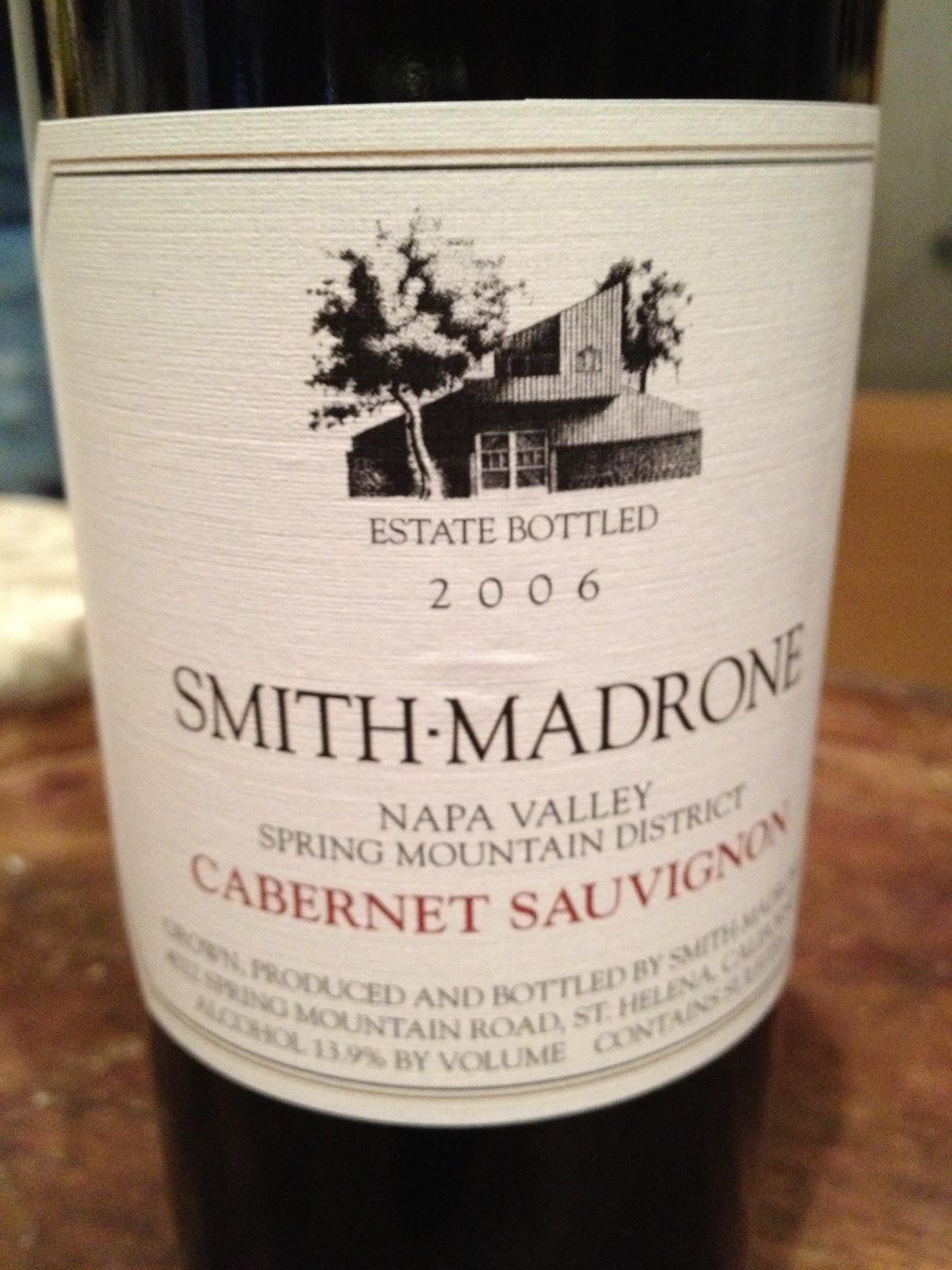
The 2006 ($45/bottle) Cabernet Sauvignon is a dark, brooding beauty. Blended with 9% Merlot and 6% Cab Franc, it is still very youthful with tight tannins and the promise of more to come. Smelling this wine is like sticking your nose into a bag of dark chocolate-covered cherries! Yum. On the palate, flavors of bright red currant, cherry cola, and black plum are complemented by savory notes of tar and exotic spice. The finish is ripe and brimming with impressions of blueberry and juicy black fruit.

With lower alcohol, the Smith’s design their wines for longevity. The 2006 Cab has only 13.9% abv, which is relatively low compared to most Napa Cabs. That being said, I found the 2007 Cabernet Sauvignon (to be released soon!) very approachable. With blue and black fruit aromas and a velvety mouthfeel, I would probably drink the 2007 sooner than I would the 2006. I was surprised to hear that Charlie had recently tasted their 1984 Cab and it was holding up very well.

There wasn't an extra bottle of that vintage around for us to sample, but we did try one more wine. The 2011 Riesling ($27/bottle) at 12.6% abv, is a terrific wine to enjoy at lunchtime or as an aperitif. The perfume is effusive and reminds me of Juicy Fruit gum with kumquat, mandarin and grapefruit. Light and delicately flavored, this wine would be the perfect pairing for Asian cuisine, salads, and on its own!

For what started as a hobby, the Los Angeles-born Smith brothers have achieved great success in crafting unique small-production wines from their Spring Mountain estate vineyards. You won’t find an art-filled tasting room or chef-endorsed food pairings at Smith-Madrone; the experience is rustic and replete with old-Napa charm—and that’s what makes it so wonderful.

Like most of the wineries on Spring Mountain, make an appointment first. And enjoy the drive!

Monday, October 18, 2010

Warming up with Terra Valentine

For my birthday two years ago, I visited Terra Valentine Winery on Spring Mountain. Curious about how my bottles of the 2005 Terra Valentine Spring Mountain Cabernet Sauvignon were ageing, I popped the cork on one the other day to pair with homemade risotto. As I stirred the risotto and slowly added chicken broth, white wine, cracked pepper, and parmesan cheese, I swirled and sipped my first glass of wine. The wine was very dry, with tannins that made me thirsty for water. The only aroma I detected was that of an almost medicinal-like smell that I wasn't sure I could appreciate.

During my tours at Chappellet, I routinely discuss the importance of serving temperature for wine. I talk about how serving a wine (white or red) at too cold of a temperature will mute the flavors and aromas of the wine. Sure enough, this bottle of 2005 Cab came straight out of my 59.6 degree cellar and I'll admit I was a little too quick to judge it.

After a bite of gouda, the wine tasted much better; the fat in the cheese quickly smoothed out the chalky tannins in the wine. And by the time I sat down with a big bowl of risotto, the wine had warmed up and finally revealed its true "colors". The medicinal aromas were replaced by notes of licorice, sage, cola and ripe cherry. The palate opened up nicely with bright flavors of juicy plum black cherry; the finish was long and fruity with a hint of espresso. Savoring my second glass, I was reminded by how much I love Terra Valentine's wines.